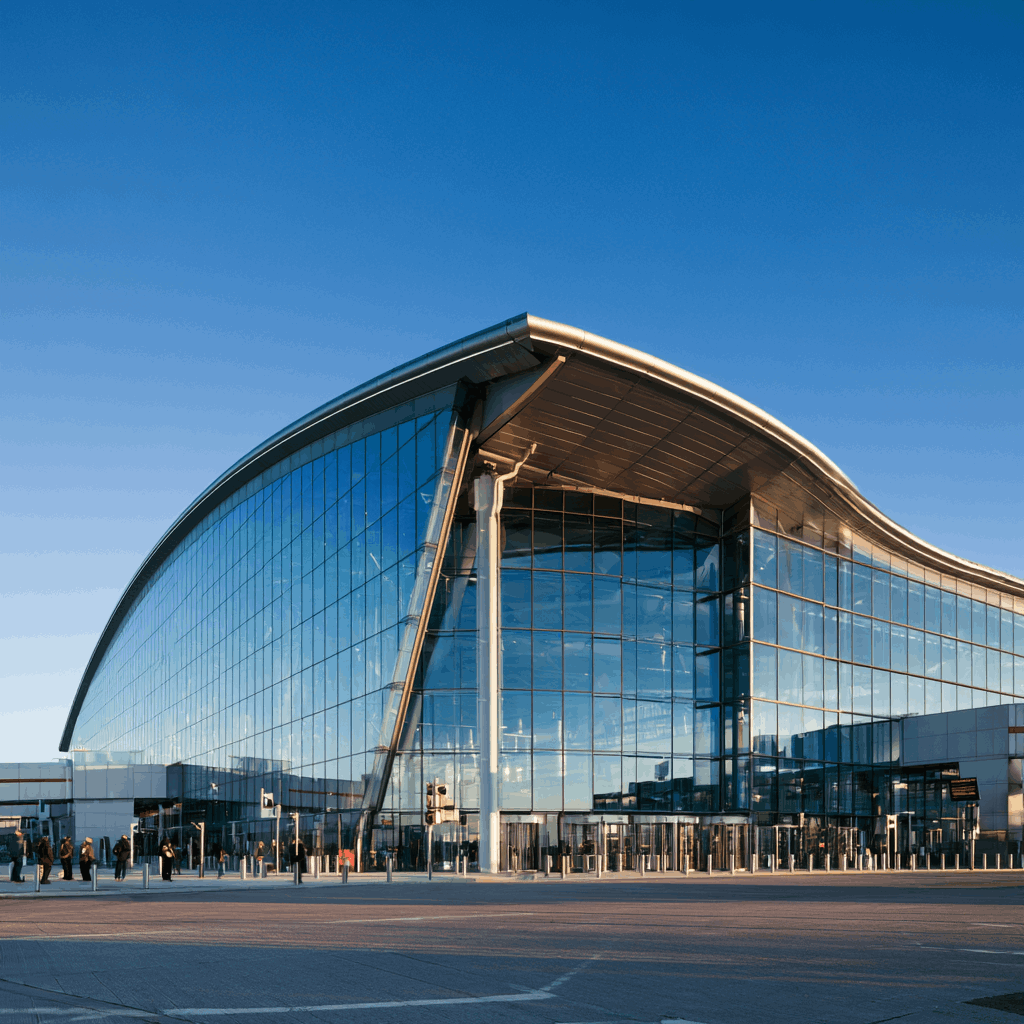
Layout of the main terminals
Terminal 2 and Terminal 3 sit close to each other on the central campus. You can walk between them under cover in about ten to fifteen minutes if you keep a steady pace. Terminal 5 is on the western side and feels more separate. Terminal 4 is on the southern side and is the most isolated of the four.
Inside each terminal the check-in areas, security, and departure gates are clearly signed. Arrival halls are usually one level below or beside the departure zones. Follow the overhead signs rather than trying to remember maps. The corridors are long but straightforward once you know the direction.
Walking times between terminals
Walking from Terminal 2 to Terminal 3 takes roughly ten to fifteen minutes. From the central terminals to Terminal 5 the walk is not practical for most people with bags. The distance is simply too far. Terminal 4 is even more remote. If you have a tight connection, do not rely on walking alone between the outer terminals.
Transfer options that actually work
Free transfer trains and buses link the terminals. The trains run frequently between the central terminals and Terminal 5. Buses connect Terminal 4 to the others. Follow the purple transfer signs. They are designed for passengers changing flights and do not require leaving the secure area if you stay airside.
If you have already collected bags or are arriving from outside, use the free inter-terminal buses or the train from the landside stops. Allow extra time during peak hours. The vehicles are regular but can fill up.
Key facilities worth knowing
All terminals have the usual mix of shops, cafes, and rest zones after security. Free water refill points are available in most departure areas. Charging stations for phones appear near many gates and in the main lounges. Toilets are frequent and generally well maintained.
If you need a quiet spot, look for the quieter gate areas away from the main shopping lanes. Some terminals have better natural light and seating than others. Terminal 5 tends to feel more spacious once you are through security. Medical points and assistance desks sit near the main check-in zones in every terminal.
A few practical notes
Check your terminal the night before. Flight numbers alone are not enough because the same route can leave from different terminals on different days. If you are transferring, confirm whether you need to clear security again. Some connections stay airside, others do not.
Allow more time than the signs suggest if you are moving with children or heavy bags. The corridors are long and the trains, while frequent, still require a short walk to the platform. Keep your boarding pass handy because you may need to show it at transfer points.
Heathrow is busy but well signed once you understand the basic layout. Know which terminal you need, use the free transfer system for longer distances, and build in a buffer for walking and waiting. That approach covers most journeys through the airport without unnecessary rushing.